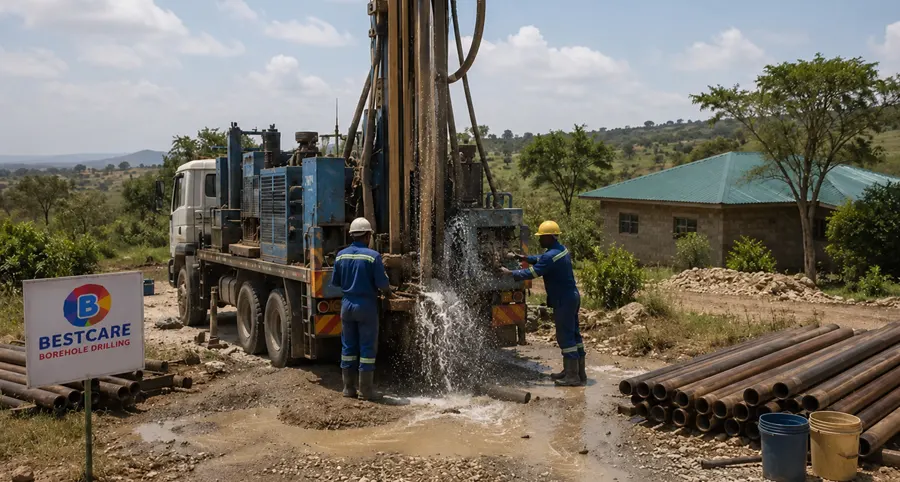
Not every underperforming borehole needs to be abandoned. Sometimes the aquifer that was hit years ago has simply dropped, the original screen has corroded past the point cleaning can fix, or the casing has partially collapsed. This is where borehole renovation becomes the more sensible option than sinking a brand-new hole a few meters away, both in cost and in disruption to an existing water system.
Bestcare Borehole Drilling regularly takes on renovation projects, including deepening existing boreholes to reach a lower aquifer and replacing screens that have outlived their usefulness. It’s more technically demanding work than a fresh drill in some ways, since it means working with what’s already there instead of starting clean.
Processes Involved in Borehole Renovation, Deepening, and Screen Replacement
| # | Process | Purpose |
|---|---|---|
| 1 | Condition Assessment & Camera Survey | Evaluate casing, screen, and structural condition of the existing borehole |
| 2 | Feasibility Study for Deepening | Determine whether a deeper aquifer is reachable and worth pursuing |
| 3 | Casing Removal or Reinforcement | Remove damaged sections or reinforce weakened casing before further work |
| 4 | Deepening (Redrilling Below Current Depth) | Extend the borehole to reach a new, more productive water-bearing zone |
| 5 | Screen Replacement | Install a new screen section matched to the confirmed water-bearing depth |
| 6 | Redevelopment & Yield Retesting | Clear drilling debris and confirm new yield performance |
1. Condition Assessment & Camera Survey
Renovation starts the same way cleaning does, with a downhole camera inspection, but the assessment goes further here. We’re checking for structural issues: cracked or collapsed casing sections, screen corrosion, and any sign the borehole has shifted or been compromised by ground movement. This assessment decides whether renovation is even viable or whether a new borehole would actually be the safer investment.
2. Feasibility Study for Deepening
If the existing aquifer has dropped or was always marginal, deepening might not help unless there’s a known or likely water-bearing zone further down. We review original drilling logs where available, or run supplementary resistivity readings, to estimate whether a lower aquifer exists and is worth the cost of extending the borehole.
3. Casing Removal or Reinforcement
Damaged casing sections near the surface or at points of collapse need to be either removed and replaced or reinforced before deeper work can proceed safely. Attempting to deepen a borehole with compromised upper casing risks further collapse and can turn a renovation into a much bigger problem.
4. Deepening (Redrilling Below Current Depth)
Once the borehole is structurally sound, drilling resumes from the existing base downward, using equipment suited to continue through the existing bore diameter. This step follows the same care as original drilling, with strata logged as we go so the new screen can be placed accurately once a productive zone is confirmed.
5. Screen Replacement
Where the original screen has corroded, scaled beyond recovery, or is simply positioned wrong for a newly deepened zone, we install a new screen section matched to the diameter and material appropriate for the depth and water chemistry involved. This is usually paired with fresh gravel packing around the new screen zone.
6. Redevelopment & Yield Retesting
After deepening or screen replacement, the borehole needs redevelopment, essentially a cleaning and surging process, to clear drilling fines and settle the gravel pack properly. A yield test follows to confirm the renovation actually delivered the improvement it was meant to, with results compared against the borehole’s original performance.
Estimated Cost of Borehole Renovation, Deepening, and Screen Replacement Services
| Service | Estimated Cost (KES) |
|---|---|
| Condition assessment & camera survey | 10,000 – 18,000 |
| Feasibility study for deepening | 15,000 – 30,000 |
| Casing reinforcement/repair | 30,000 – 80,000 |
| Deepening (per meter) | 3,500 – 6,000 |
| Screen replacement | 40,000 – 90,000 |
| Redevelopment & yield retest | 20,000 – 35,000 |
Total renovation cost depends heavily on how much deepening is needed and the extent of casing damage.
Frequently Asked Questions
1. Is renovation always cheaper than a new borehole? Usually, yes, particularly when the existing casing is largely sound. But if structural damage is extensive, a new borehole can sometimes work out more cost-effective, which is why the assessment stage matters.
2. How do I know if my borehole needs deepening rather than cleaning? If cleaning has already been tried and yield hasn’t recovered, and the water table has genuinely dropped, deepening is the more likely fix. A yield test after cleaning usually clarifies which situation you’re in.
3. Can any borehole be deepened? Not always. It depends on the original casing diameter, its condition, and whether a viable aquifer exists below the current depth.
4. How long does a full renovation project take? Most renovation projects, including deepening and screen replacement, take between 3 and 7 days depending on depth and complexity.
5. Will renovation restore the borehole to its original output? In many cases renovation restores or even improves original yield, especially where deepening reaches a stronger aquifer than the one originally tapped.
5 Reasons to Choose Bestcare Borehole Drilling
- Honest feasibility assessments — we tell clients plainly when renovation isn’t the better option rather than pushing an unnecessary job.
- Structural expertise — our team understands how to work with compromised existing casing without making the situation worse.
- Accurate deepening decisions — feasibility studies are grounded in actual geological data, not assumption.
- Matched screen and casing materials — replacements are selected for the specific water chemistry and depth involved, not a one-size default.
- Proven yield recovery — our renovation projects are backed by before-and-after test data, not just visual improvement.